Retro Art World
  • Home
  • Galleries
    • AMERICANA ART >
      • Modern Americana: Work & Professions
      • Retro Pop Travel Art
      • Mid-Century Americana Art
      • Great American Songbook Art
      • Pride of State Posters
    • RETRO ABSTRACTS >
      • Retro Abstractions site
      • Mid-Century Modern
      • Neon Retro Art
      • Abstract Pet Art
    • HERITAGE & HISTORY >
      • American Stamp Craft >
        • Gallery 1
        • Gallery 2
        • Gallery 3
      • 20th Century Highlights >
        • 1900s
        • 1910s
        • 1920s
        • 1930s
        • 1940s
        • 1950s
        • 1960s
        • 1970s
        • 1980s
        • 1990s
  • HOLLYWOOD RETRO
    • RETRO ART AND RETRO FILM
    • Poster gallery tours
    • Film Music
    • Portraits >
      • Gallery A
      • Gallery B
      • Colorized photos
  • ARTICLES
    • RETRO ART SPOTLIGHT >
      • WHAT IS RETRO ART?
      • RETRO VS. VINTAGE ART
      • CAN NEW ART BE RETRO?
      • WHY RETRO ART DRAWS US BACK
    • POP ART & MID-CENTURY INFLUENCE >
      • RETRO VS. MID-CENTURY ART
      • WHY POP ART STILL FEELS RETRO
      • HOW GRAPHIC DESIGN SHAPED RETRO IMAGERY
    • SUBJECTS OF RETRO ART >
      • AMERICANA AND RETRO ART
      • WHY EVERDAY PLACES FEEL RETRO
      • RETRO ART AND THE AMERICAN LANDSCAPE
      • WHY SCENIC ART OFTEN FEELS RETRO
      • LIVING WITH RETRO ART
  • About
  • Contact
  • Home
  • Galleries
    • AMERICANA ART >
      • Modern Americana: Work & Professions
      • Retro Pop Travel Art
      • Mid-Century Americana Art
      • Great American Songbook Art
      • Pride of State Posters
    • RETRO ABSTRACTS >
      • Retro Abstractions site
      • Mid-Century Modern
      • Neon Retro Art
      • Abstract Pet Art
    • HERITAGE & HISTORY >
      • American Stamp Craft >
        • Gallery 1
        • Gallery 2
        • Gallery 3
      • 20th Century Highlights >
        • 1900s
        • 1910s
        • 1920s
        • 1930s
        • 1940s
        • 1950s
        • 1960s
        • 1970s
        • 1980s
        • 1990s
  • HOLLYWOOD RETRO
    • RETRO ART AND RETRO FILM
    • Poster gallery tours
    • Film Music
    • Portraits >
      • Gallery A
      • Gallery B
      • Colorized photos
  • ARTICLES
    • RETRO ART SPOTLIGHT >
      • WHAT IS RETRO ART?
      • RETRO VS. VINTAGE ART
      • CAN NEW ART BE RETRO?
      • WHY RETRO ART DRAWS US BACK
    • POP ART & MID-CENTURY INFLUENCE >
      • RETRO VS. MID-CENTURY ART
      • WHY POP ART STILL FEELS RETRO
      • HOW GRAPHIC DESIGN SHAPED RETRO IMAGERY
    • SUBJECTS OF RETRO ART >
      • AMERICANA AND RETRO ART
      • WHY EVERDAY PLACES FEEL RETRO
      • RETRO ART AND THE AMERICAN LANDSCAPE
      • WHY SCENIC ART OFTEN FEELS RETRO
      • LIVING WITH RETRO ART
  • About
  • Contact
Picture

Can New Art Be Retro?
Why time, not age, determines what feels retro

At first glance, the idea sounds contradictory. If something is new, how can it be retro? The confusion comes from thinking of retro as an age instead of a perspective.

Retro is not about when something is made. It’s about what it’s looking back at.

New art can absolutely be retro because retro art is retrospective by nature. It exists in the present, but its subject, mood, and point of view come from earlier times that no longer feel current. What matters is not the date on the artwork, but the distance between the present and what’s being seen.

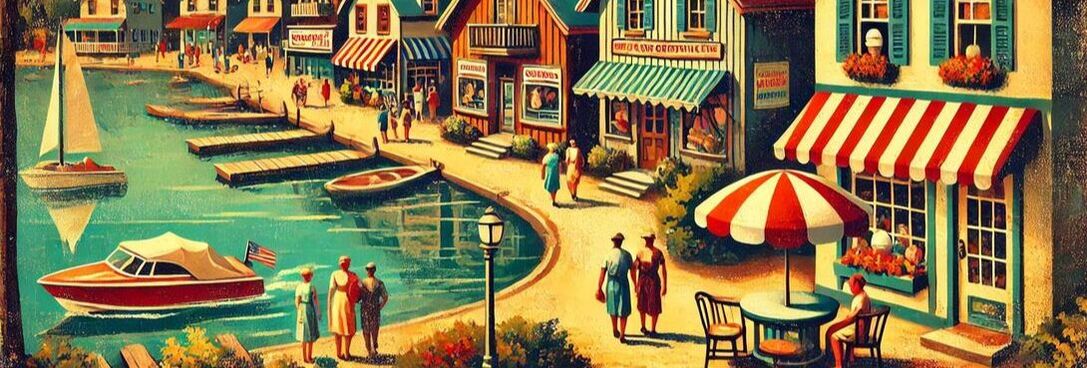
A diner painted today can feel more retro than a sign printed fifty years ago. The sign belonged to its own moment. The painting looks back at a way of life that has already passed. One is an artifact. The other is a reflection.

That difference explains why age alone doesn’t create a retro feeling. Plenty of old things don’t feel retro at all. They may feel outdated, worn, or simply obsolete. Retro requires recognition. It requires a sense that what’s being shown once felt normal, and now feels separate enough to be noticed.

This is also why retro tends to emerge in waves. Certain decades don’t feel retro until enough time has passed for habits, designs, and expectations to clearly change. When that shift becomes obvious, people begin to look back—not with urgency, but with curiosity.

New art enters this space by using hindsight. The artist isn’t documenting the present. They’re revisiting a completed chapter of everyday life. They choose scenes, colors, and visual language that signal distance without turning the image into a museum piece.

Modern tools don’t weaken this effect. In many cases, they strengthen it. Digital illustration, contemporary printing, and AI-assisted techniques allow artists to revisit earlier aesthetics with clarity and control that didn’t exist at the time. The work doesn’t pretend to be old. It simply carries the feeling of looking back.

This is where retro art differs from revival or reproduction. A revival tries to bring a style back into use. Retro art accepts that the moment has passed. It doesn’t aim to restart it. It aims to understand it.

That understanding often leads to simplification. New retro art tends to smooth out the noise of the past. It highlights what memory keeps and lets go of what time has filtered out. The result feels familiar, but not cluttered. Recognizable, but not exact.

The viewer plays a role here too. You don’t need to have lived through the time being referenced. You only need to sense that it belongs to an earlier rhythm of life. The image works if it feels shared, even across generations.

This is why new art can feel convincingly retro without copying specific objects or styles. A quiet street, a storefront, a classroom, a travel scene. These settings carry the weight of repetition. They were lived in by many people, over many years. Once they fall out of the present, they become available for reflection.

Retro art, then, is less about age than about awareness. It begins when we realize that something once ordinary is no longer around in the same way—and that realization changes how we see it.

So yes, new art can be retro. In fact, most retro art is new. It exists because enough time has passed to allow us to look back with clarity instead of habit.

Retro art isn’t trying to return us to earlier times. It’s helping us understand them from where we stand now.

Copyright © 2025  Retro Art World