Retro vs. Vintage Art: What’s the Difference?
Objects from the past vs. the present looking back
The words retro and vintage are often used as if they mean the same thing. They don’t. The difference isn’t subtle, and it isn’t about taste. It’s about time, use, and perspective.
Vintage art and objects come from the past. They were made in their own era and have simply survived. A vintage poster was printed decades ago. A vintage sign once hung in a working storefront. These things were not created to look back at anything. They were created to function in the moment they belonged to.
Retro art works differently.
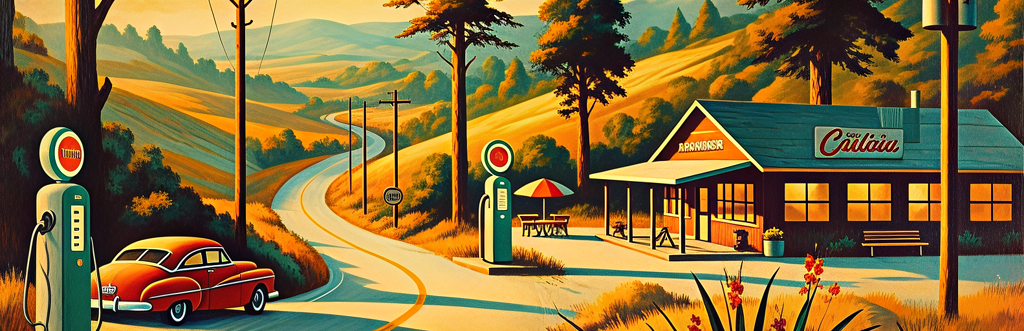
Retro art is made in the present, but it looks back. It is retrospective by nature. It doesn’t come from an earlier time—it responds to one. The artist is aware of the distance that has passed and uses that distance to reinterpret what once felt ordinary.
That distinction matters.
A vintage travel poster is an artifact. It reflects the values, styles, and assumptions of its own time without commentary. A retro travel poster is a reflection. It reimagines the idea of travel through memory, familiarity, and hindsight. The difference is not authenticity versus imitation; it is use versus perspective.
This is why vintage objects often feel grounded in material reality. Paper has aged. Colors have faded. Edges show wear. The object carries physical history. Retro art, by contrast, carries emotional history. It doesn’t need to show wear. It needs to suggest recognition.
The visual language can look similar, which is where confusion often begins. Both may use bold typography, simple shapes, or limited color palettes. Both may draw from the same decades. But vintage work did not know it would one day be remembered. Retro art is built entirely on that knowledge.
Vintage design solved problems. It had to be clear, affordable, readable, and effective. Retro art borrows those solutions, but it no longer answers the same demands. It doesn’t need to sell a product or direct foot traffic. It needs to evoke a feeling of having been there—or of believing you could have been.
That’s why retro art often feels cleaner, more intentional, and slightly idealized. It removes clutter. It simplifies. It selects what memory tends to keep and lets the rest fall away. Vintage objects include everything their time produced, including the awkward and the excessive. Retro art edits.
Another key difference is availability. Vintage art is limited by survival. There are only so many original posters, signs, or prints left. Retro art is not constrained that way. It can explore themes, places, and moods that no longer exist—or that were never documented well in the first place.
This freedom allows retro art to focus on everyday environments rather than prized objects. A classroom interior, a roadside building, a small-town street. Scenes that were rarely preserved but deeply lived. Vintage artifacts often represent what was valued. Retro art often represents what was normal.
Understanding this difference helps explain why both can exist side by side without replacing one another. Vintage objects connect us physically to the past. Retro art connects us emotionally to it. One is a remnant. The other is a response.
Neither is more “real” than the other. They simply serve different purposes.
Vintage shows us what something was.
Retro shows us what it feels like now to look back at it.
That’s why the distinction matters. Retro art isn’t trying to pass as old. It isn’t pretending to be something it’s not. It openly acknowledges the distance between then and now—and uses that distance as its source of meaning.
In that sense, retro and vintage don’t compete. They complete different parts of the same story: one preserves the past as it existed, and the other helps us understand why it still stays with us.
Vintage art and objects come from the past. They were made in their own era and have simply survived. A vintage poster was printed decades ago. A vintage sign once hung in a working storefront. These things were not created to look back at anything. They were created to function in the moment they belonged to.
Retro art works differently.
Retro art is made in the present, but it looks back. It is retrospective by nature. It doesn’t come from an earlier time—it responds to one. The artist is aware of the distance that has passed and uses that distance to reinterpret what once felt ordinary.
That distinction matters.
A vintage travel poster is an artifact. It reflects the values, styles, and assumptions of its own time without commentary. A retro travel poster is a reflection. It reimagines the idea of travel through memory, familiarity, and hindsight. The difference is not authenticity versus imitation; it is use versus perspective.
This is why vintage objects often feel grounded in material reality. Paper has aged. Colors have faded. Edges show wear. The object carries physical history. Retro art, by contrast, carries emotional history. It doesn’t need to show wear. It needs to suggest recognition.
The visual language can look similar, which is where confusion often begins. Both may use bold typography, simple shapes, or limited color palettes. Both may draw from the same decades. But vintage work did not know it would one day be remembered. Retro art is built entirely on that knowledge.
Vintage design solved problems. It had to be clear, affordable, readable, and effective. Retro art borrows those solutions, but it no longer answers the same demands. It doesn’t need to sell a product or direct foot traffic. It needs to evoke a feeling of having been there—or of believing you could have been.
That’s why retro art often feels cleaner, more intentional, and slightly idealized. It removes clutter. It simplifies. It selects what memory tends to keep and lets the rest fall away. Vintage objects include everything their time produced, including the awkward and the excessive. Retro art edits.
Another key difference is availability. Vintage art is limited by survival. There are only so many original posters, signs, or prints left. Retro art is not constrained that way. It can explore themes, places, and moods that no longer exist—or that were never documented well in the first place.
This freedom allows retro art to focus on everyday environments rather than prized objects. A classroom interior, a roadside building, a small-town street. Scenes that were rarely preserved but deeply lived. Vintage artifacts often represent what was valued. Retro art often represents what was normal.
Understanding this difference helps explain why both can exist side by side without replacing one another. Vintage objects connect us physically to the past. Retro art connects us emotionally to it. One is a remnant. The other is a response.
Neither is more “real” than the other. They simply serve different purposes.
Vintage shows us what something was.
Retro shows us what it feels like now to look back at it.
That’s why the distinction matters. Retro art isn’t trying to pass as old. It isn’t pretending to be something it’s not. It openly acknowledges the distance between then and now—and uses that distance as its source of meaning.
In that sense, retro and vintage don’t compete. They complete different parts of the same story: one preserves the past as it existed, and the other helps us understand why it still stays with us.