Retro Art World
  • Home
  • Galleries
    • AMERICANA ART >
      • Modern Americana: Work & Professions
      • Retro Pop Travel Art
      • Mid-Century Americana Art
      • Great American Songbook Art
      • Pride of State Posters
    • RETRO ABSTRACTS >
      • Retro Abstractions site
      • Mid-Century Modern
      • Neon Retro Art
      • Abstract Pet Art
    • HERITAGE & HISTORY >
      • American Stamp Craft >
        • Gallery 1
        • Gallery 2
        • Gallery 3
      • 20th Century Highlights >
        • 1900s
        • 1910s
        • 1920s
        • 1930s
        • 1940s
        • 1950s
        • 1960s
        • 1970s
        • 1980s
        • 1990s
  • HOLLYWOOD RETRO
    • RETRO ART AND RETRO FILM
    • Poster gallery tours
    • Film Music
    • Portraits >
      • Gallery A
      • Gallery B
      • Colorized photos
  • ARTICLES
    • RETRO ART SPOTLIGHT >
      • WHAT IS RETRO ART?
      • RETRO VS. VINTAGE ART
      • CAN NEW ART BE RETRO?
      • WHY RETRO ART DRAWS US BACK
    • POP ART & MID-CENTURY INFLUENCE >
      • RETRO VS. MID-CENTURY ART
      • WHY POP ART STILL FEELS RETRO
      • HOW GRAPHIC DESIGN SHAPED RETRO IMAGERY
    • SUBJECTS OF RETRO ART >
      • AMERICANA AND RETRO ART
      • WHY EVERDAY PLACES FEEL RETRO
      • RETRO ART AND THE AMERICAN LANDSCAPE
      • WHY SCENIC ART OFTEN FEELS RETRO
      • LIVING WITH RETRO ART
  • About
  • Contact
  • Home
  • Galleries
    • AMERICANA ART >
      • Modern Americana: Work & Professions
      • Retro Pop Travel Art
      • Mid-Century Americana Art
      • Great American Songbook Art
      • Pride of State Posters
    • RETRO ABSTRACTS >
      • Retro Abstractions site
      • Mid-Century Modern
      • Neon Retro Art
      • Abstract Pet Art
    • HERITAGE & HISTORY >
      • American Stamp Craft >
        • Gallery 1
        • Gallery 2
        • Gallery 3
      • 20th Century Highlights >
        • 1900s
        • 1910s
        • 1920s
        • 1930s
        • 1940s
        • 1950s
        • 1960s
        • 1970s
        • 1980s
        • 1990s
  • HOLLYWOOD RETRO
    • RETRO ART AND RETRO FILM
    • Poster gallery tours
    • Film Music
    • Portraits >
      • Gallery A
      • Gallery B
      • Colorized photos
  • ARTICLES
    • RETRO ART SPOTLIGHT >
      • WHAT IS RETRO ART?
      • RETRO VS. VINTAGE ART
      • CAN NEW ART BE RETRO?
      • WHY RETRO ART DRAWS US BACK
    • POP ART & MID-CENTURY INFLUENCE >
      • RETRO VS. MID-CENTURY ART
      • WHY POP ART STILL FEELS RETRO
      • HOW GRAPHIC DESIGN SHAPED RETRO IMAGERY
    • SUBJECTS OF RETRO ART >
      • AMERICANA AND RETRO ART
      • WHY EVERDAY PLACES FEEL RETRO
      • RETRO ART AND THE AMERICAN LANDSCAPE
      • WHY SCENIC ART OFTEN FEELS RETRO
      • LIVING WITH RETRO ART
  • About
  • Contact
Picture

Retro Art and the American Landscape
Small towns, highways, coastlines, and open space

The American landscape has always been more than scenery. It has functioned as a backdrop for movement—people traveling, settling, working, and passing through. Long before it became something to admire, it was something to use. That practical relationship is one reason the landscape lends itself so easily to retro art.

Much of the American landscape people recognize today was shaped in the middle of the twentieth century. Highways stretched across open land. Small towns grew around intersections and rail lines. Coastlines filled with modest development meant for leisure rather than spectacle. These places weren’t designed to feel historic. They were designed to serve everyday life.

Only later did they begin to feel distinctive.

Retro art looks back at these landscapes after their original role has shifted. Highways once built for open-road travel are now crowded or bypassed. Small towns have thinned out, expanded, or been absorbed by larger systems. Coastal spaces have changed in scale and use. The land itself may be the same, but how people move through it is not.

That change creates distance.

Unlike famous landmarks, the American landscape in retro art is often anonymous. A stretch of road. A cluster of buildings. A shoreline with no name attached. This anonymity is part of its power. The viewer doesn’t need to know where the place is. It only needs to feel plausible.

The landscape becomes a container for memory rather than a destination.

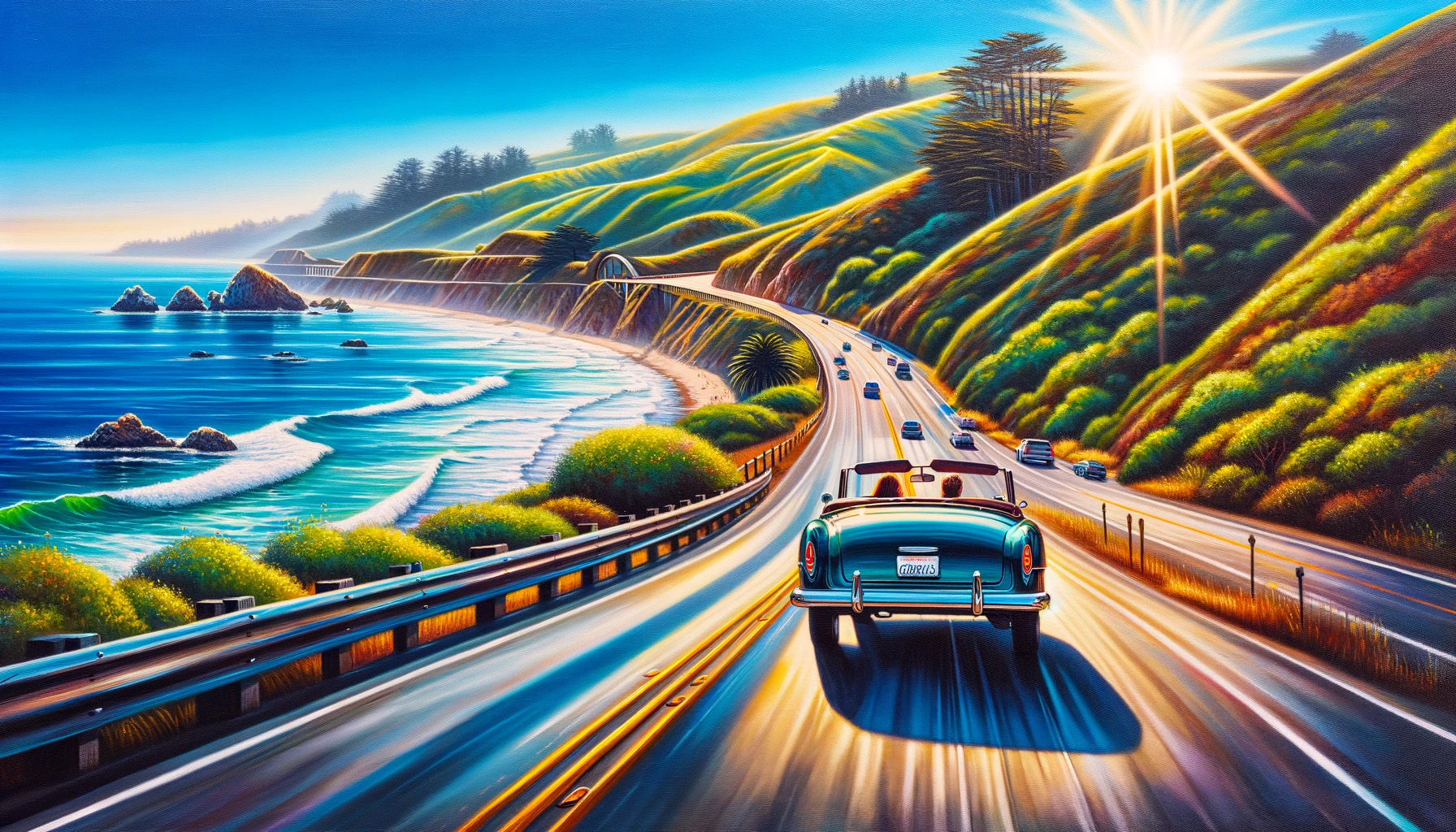
This is why retro art favors wide views and simple compositions. Open roads, long horizons, modest structures. These elements suggest freedom and movement without spelling out a story. The scene feels paused, as if someone has just driven through or is about to arrive.

Color plays an important role here. Retro landscapes often use restrained, warm palettes that soften contrast and slow the eye. The land feels settled rather than dramatic. Even when the space is large, the mood is quiet.

That quiet matters. The American landscape in retro art is not about conquest or spectacle. It’s about presence. Being there. Passing time. Watching the land change gradually, almost without notice.

There is also a sense of shared ownership in these images. Roads, towns, and coastlines belonged to the public in a practical way. They were not curated experiences. They were accessible, repeatable, and familiar. That familiarity carries forward in retro art.

Modern viewers may never have driven those highways or lived in those towns, yet the scenes still feel understandable. The scale is human. The structures are legible. The space invites rather than overwhelms.

Retro art doesn’t present the American landscape as untouched or ideal. It presents it as lived-in. Marked by use, shaped by routine, and softened by time. The image doesn’t promise adventure. It suggests continuity.

In this way, retro art turns the American landscape into a reflection of everyday movement rather than a symbol of grandeur. It becomes a record of how people once moved through space, not how they conquered it.

That is why the American landscape continues to feel retro. It holds the traces of earlier rhythms—slower travel, clearer routes, and a closer relationship between people and place.

Retro art doesn’t try to bring those rhythms back. It simply gives them room to be seen again, long after the road has changed direction.

Copyright © 2025  Retro Art World