Retro Art and Retro Film
Still images and motion pictures as two ways of looking back
Retro art and retro film are often discussed separately, but they are doing closely related work. Both are concerned with looking back at earlier times, and both rely on distance to turn everyday life into something we can finally notice. The difference lies not in subject, but in how each medium handles memory.
Retro film looks back through motion. Retro art looks back through stillness.
Film captures time unfolding. Even when a movie is set in the past, it moves forward frame by frame. Characters walk, talk, hesitate, and leave. The viewer experiences the past as a sequence of moments, shaped by pacing, sound, and narrative. Memory in film feels active. It progresses.
Retro art, by contrast, pauses time.
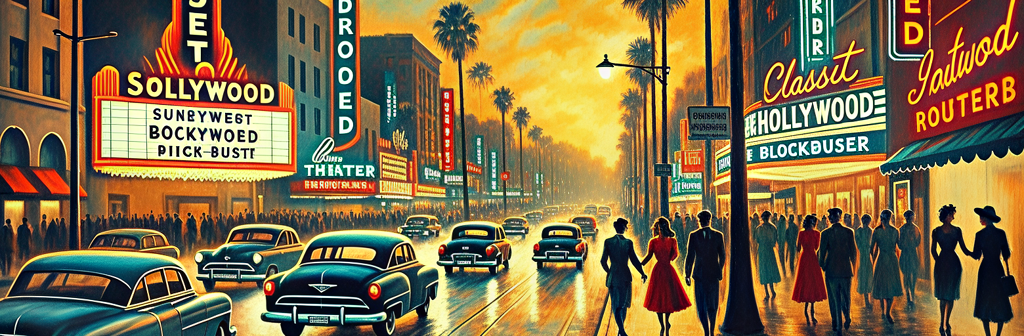
A single image holds everything in place. There is no before and after, only a suspended moment. A street corner, a diner interior, a storefront, a landscape. Nothing is happening, yet everything has already happened. The viewer supplies the motion mentally, filling in what came before and what might come next.
That pause is powerful.
Both forms depend on recognition. A retro film may recreate period details—clothing, signage, music—not because accuracy alone matters, but because those details signal distance. They tell the viewer: this world operates by different rhythms than the present. Retro art does the same thing visually, using color, composition, and design language to establish that separation.
Neither medium needs historical precision to succeed. What matters is plausibility and mood. A retro film doesn’t need to show every detail exactly as it was; it needs to feel right. Retro art follows the same rule. It selects what memory tends to keep and lets the rest fall away.
This selective process is key. Memory is not a recording. It’s an edit.
Film edits through scenes and cuts. Art edits through framing and omission. In both cases, the result is not the past itself, but a shaped version of it—one filtered through hindsight.
There’s also a difference in how each medium invites the viewer to participate. Retro film guides attention. The director controls where you look, when you listen, and how long you stay with a moment. Retro art offers more freedom. The viewer decides how long to look, where to linger, and what to imagine beyond the frame.
That freedom often makes retro artfeel quieter and more personal. Without dialogue or motion, the image leaves room for the viewer’s own associations. The scene may remind one person of childhood, another of a place they never visited but somehow recognize.
Retro film, on the other hand, builds shared memory through story. Even when the setting is unfamiliar, the narrative carries the viewer along. The past is experienced collectively, guided by sound and movement.
Despite these differences, the two forms reinforce each other. Many retro films borrow their visual language from graphic design, posters, and everyday signage of earlier times. Likewise, retro art often borrows cinematic framing—wide streets, dramatic light, implied motion—to suggest a story just outside the frame.
Both rely on atmosphere more than explanation.
And both depend on the same essential condition: enough time must have passed for the present to feel separate from what’s being shown. Without that distance, neither retro art nor retro film works. The moment must be complete before it can be revisited.
In the end, retro art and retro film are two parallel ways of doing the same thing. One moves through time. The other holds time still. One tells a story. The other suggests one.
Together, they show how looking back doesn’t require nostalgia or longing. It requires perspective. And when that perspective arrives, both still images and moving pictures help us see earlier times not as history lessons, but as lived worlds that continue to shape how we remember.
Retro film looks back through motion. Retro art looks back through stillness.
Film captures time unfolding. Even when a movie is set in the past, it moves forward frame by frame. Characters walk, talk, hesitate, and leave. The viewer experiences the past as a sequence of moments, shaped by pacing, sound, and narrative. Memory in film feels active. It progresses.
Retro art, by contrast, pauses time.
A single image holds everything in place. There is no before and after, only a suspended moment. A street corner, a diner interior, a storefront, a landscape. Nothing is happening, yet everything has already happened. The viewer supplies the motion mentally, filling in what came before and what might come next.
That pause is powerful.
Both forms depend on recognition. A retro film may recreate period details—clothing, signage, music—not because accuracy alone matters, but because those details signal distance. They tell the viewer: this world operates by different rhythms than the present. Retro art does the same thing visually, using color, composition, and design language to establish that separation.
Neither medium needs historical precision to succeed. What matters is plausibility and mood. A retro film doesn’t need to show every detail exactly as it was; it needs to feel right. Retro art follows the same rule. It selects what memory tends to keep and lets the rest fall away.
This selective process is key. Memory is not a recording. It’s an edit.
Film edits through scenes and cuts. Art edits through framing and omission. In both cases, the result is not the past itself, but a shaped version of it—one filtered through hindsight.
There’s also a difference in how each medium invites the viewer to participate. Retro film guides attention. The director controls where you look, when you listen, and how long you stay with a moment. Retro art offers more freedom. The viewer decides how long to look, where to linger, and what to imagine beyond the frame.
That freedom often makes retro artfeel quieter and more personal. Without dialogue or motion, the image leaves room for the viewer’s own associations. The scene may remind one person of childhood, another of a place they never visited but somehow recognize.
Retro film, on the other hand, builds shared memory through story. Even when the setting is unfamiliar, the narrative carries the viewer along. The past is experienced collectively, guided by sound and movement.
Despite these differences, the two forms reinforce each other. Many retro films borrow their visual language from graphic design, posters, and everyday signage of earlier times. Likewise, retro art often borrows cinematic framing—wide streets, dramatic light, implied motion—to suggest a story just outside the frame.
Both rely on atmosphere more than explanation.
And both depend on the same essential condition: enough time must have passed for the present to feel separate from what’s being shown. Without that distance, neither retro art nor retro film works. The moment must be complete before it can be revisited.
In the end, retro art and retro film are two parallel ways of doing the same thing. One moves through time. The other holds time still. One tells a story. The other suggests one.
Together, they show how looking back doesn’t require nostalgia or longing. It requires perspective. And when that perspective arrives, both still images and moving pictures help us see earlier times not as history lessons, but as lived worlds that continue to shape how we remember.