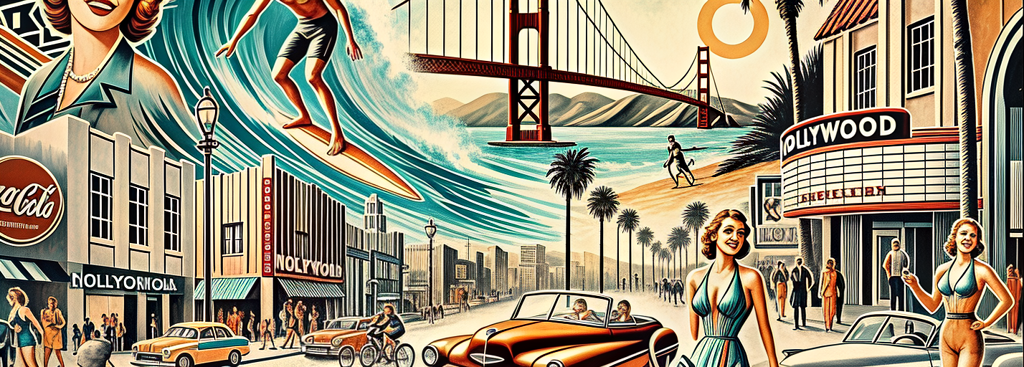
Living With Retro Art
Why certain images are chosen to stay on walls
Most art is encountered briefly. It’s seen, admired, and moved past. Living with art is different. An image on a wall becomes part of daily life. It’s seen repeatedly, often without conscious attention. Over time, it has to earn its place by how it feels to live alongside it.
Retro art tends to do that well.
One reason is familiarity. Retro imagery often depicts places, scenes, and visual language that feel already known. That familiarity lowers resistance. The image doesn’t demand explanation or emotional effort. It settles in quietly, becoming part of the environment rather than a statement that needs to be reasserted.
This matters in lived spaces. Art that constantly asks for attention can become tiring. Retro art doesn’t compete with daily activity. It complements it. The scenes feel steady, readable, and calm.
Another reason retro art works on walls is that it carries memory without being personal. The images suggest shared experience rather than individual stories. A diner interior, a storefront, a stretch of road. These scenes don’t belong to one person’s history. They belong to many. That allows different viewers to bring their own associations without feeling locked into a single narrative.
Retro art also benefits from visual restraint. Bold colors and clear shapes are present, but they’re usually balanced and intentional. The image holds together from a distance and reveals detail slowly. This makes it durable. It doesn’t wear out quickly.
There’s also a sense of completeness in retro imagery. The scenes often feel settled, as if nothing needs to happen next. That sense of closure is important in spaces meant for living. The image doesn’t create tension. It creates presence.
Over time, retro art becomes a reference point rather than a focal point. It marks a rhythm in the space. People pass it, glance at it, and move on. Occasionally, they stop and notice something new. That balance between background and attention is hard to achieve, but retro art naturally leans that way.
Another factor is distance from the present. Retro art depicts a world that no longer operates at the same pace. That separation gives it emotional neutrality. The image isn’t tied to current events or trends. It doesn’t age quickly. In a living space, that neutrality is valuable.
This is also why retro art often works across different settings. Homes, offices, waiting rooms, and public spaces can all accommodate it. The imagery doesn’t feel out of place because it doesn’t insist on relevance. It exists slightly outside the present.
Living with retro art is less about nostalgia and more about continuity. The images remind us that everyday life has always been built from ordinary places and repeated moments. Seeing those scenes on a wall quietly reinforces that idea.
Retro art stays because it doesn’t interrupt. It observes. It allows the space to remain functional while adding depth over time.
In that way, living with retro art is not about decorating with the past. It’s about choosing images that remain steady as life moves around them—images that grow familiar without disappearing, and meaningful without needing to explain why.
Retro art tends to do that well.
One reason is familiarity. Retro imagery often depicts places, scenes, and visual language that feel already known. That familiarity lowers resistance. The image doesn’t demand explanation or emotional effort. It settles in quietly, becoming part of the environment rather than a statement that needs to be reasserted.
This matters in lived spaces. Art that constantly asks for attention can become tiring. Retro art doesn’t compete with daily activity. It complements it. The scenes feel steady, readable, and calm.
Another reason retro art works on walls is that it carries memory without being personal. The images suggest shared experience rather than individual stories. A diner interior, a storefront, a stretch of road. These scenes don’t belong to one person’s history. They belong to many. That allows different viewers to bring their own associations without feeling locked into a single narrative.
Retro art also benefits from visual restraint. Bold colors and clear shapes are present, but they’re usually balanced and intentional. The image holds together from a distance and reveals detail slowly. This makes it durable. It doesn’t wear out quickly.
There’s also a sense of completeness in retro imagery. The scenes often feel settled, as if nothing needs to happen next. That sense of closure is important in spaces meant for living. The image doesn’t create tension. It creates presence.
Over time, retro art becomes a reference point rather than a focal point. It marks a rhythm in the space. People pass it, glance at it, and move on. Occasionally, they stop and notice something new. That balance between background and attention is hard to achieve, but retro art naturally leans that way.
Another factor is distance from the present. Retro art depicts a world that no longer operates at the same pace. That separation gives it emotional neutrality. The image isn’t tied to current events or trends. It doesn’t age quickly. In a living space, that neutrality is valuable.
This is also why retro art often works across different settings. Homes, offices, waiting rooms, and public spaces can all accommodate it. The imagery doesn’t feel out of place because it doesn’t insist on relevance. It exists slightly outside the present.
Living with retro art is less about nostalgia and more about continuity. The images remind us that everyday life has always been built from ordinary places and repeated moments. Seeing those scenes on a wall quietly reinforces that idea.
Retro art stays because it doesn’t interrupt. It observes. It allows the space to remain functional while adding depth over time.
In that way, living with retro art is not about decorating with the past. It’s about choosing images that remain steady as life moves around them—images that grow familiar without disappearing, and meaningful without needing to explain why.