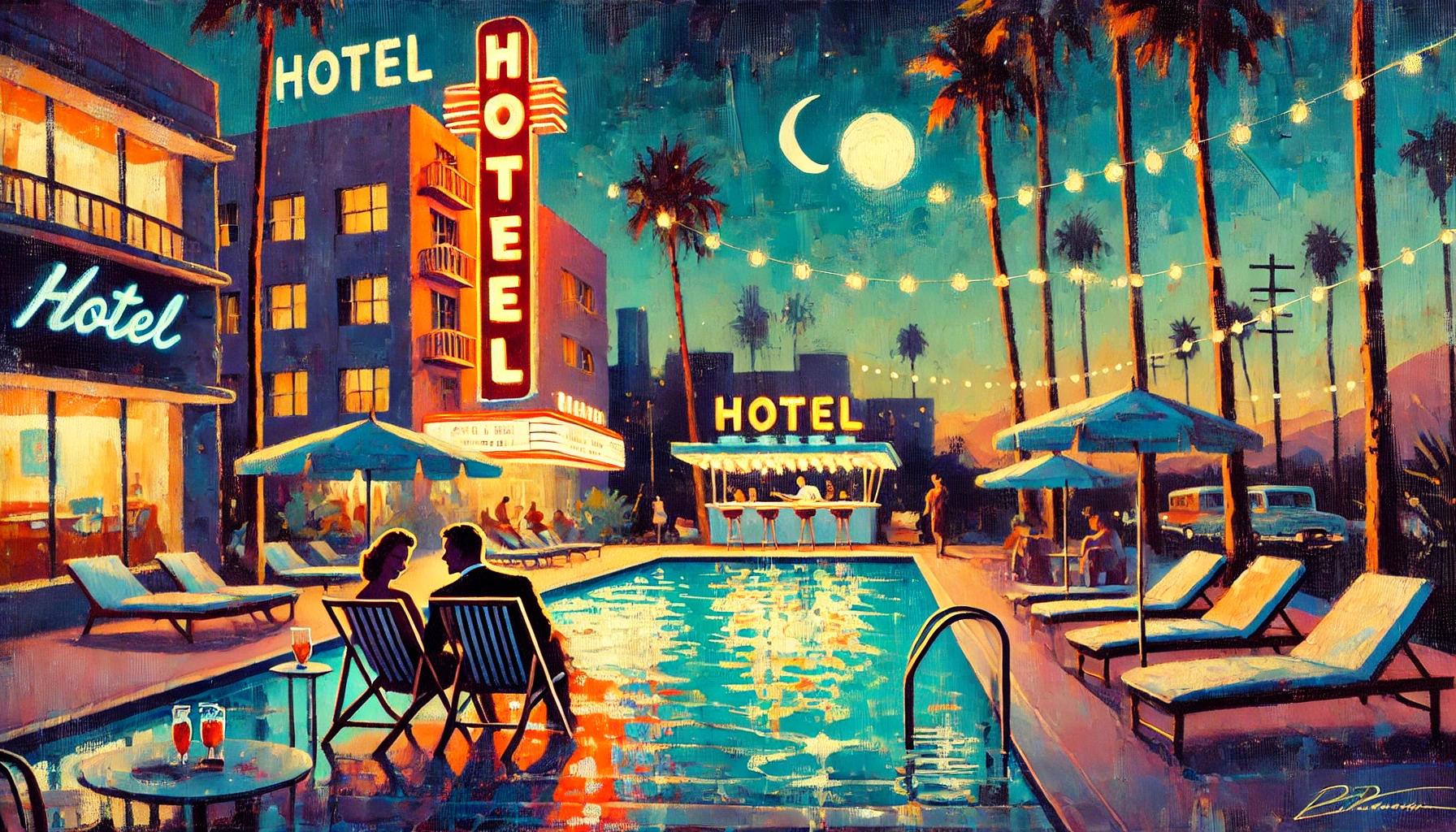
Why Retro Art Draws Us Back
Recognition, familiarity, and the quiet power of hindsight
Retro art draws people in for a simple reason: it feels familiar before it feels artistic.
Most viewers don’t approach retro imagery thinking about movements, eras, or design theory. They respond first with recognition. A place that looks known. A color scheme that feels remembered. A scene that seems quietly connected to something already stored away in the mind.
That recognition happens quickly and without effort. It doesn’t ask the viewer to study or decode. It says, You’ve seen this before—even if you haven’t seen this exact image.
This is where retro art differs from many other forms of visual art. It doesn’t rely on novelty. It relies on memory, or at least the feeling of memory. The diner doesn’t need to be your diner. The school hallway doesn’t need to be one you walked through. The scene works because it resembles something real enough to feel shared.
Familiarity does most of the work.
Retro art often presents places and objects that were once ordinary: storefronts, signs, classrooms, highways, travel posters, leisure scenes. When these things were part of daily life, they were rarely noticed. They were useful, not meaningful. Only later does familiarity turn into something else. That “something else” is hindsight.
Hindsight gives weight to what once felt light. It slows the moment down just enough for us to see it clearly. Retro art operates in that slowed-down space. It doesn’t freeze history; it pauses it. Long enough to let recognition settle in.
This is why retro art rarely feels confrontational. It doesn’t challenge the viewer with shock or abstraction. Instead, it invites a quiet agreement. Yes, that feels right. The viewer isn’t asked to imagine a world they don’t know, but to revisit one they almost remember.
Even when the imagery comes from decades a viewer never lived through, the effect is similar. The visual language—bold colors, simple shapes, readable typography—comes from a time when design had to communicate quickly and clearly. That clarity still reads as honest. It feels human. Understandable.
Retro art also benefits from emotional safety. The past, once it’s safely behind us, feels less demanding than the present. The image isn’t asking anything. It isn’t urgent. It doesn’t scroll, flash, or update. It simply exists.
That stillness matters.
In a world saturated with constant motion and information, retro art offers a visual pause. The scenes suggest a pace that feels slower, or at least more settled. Whether that pace ever truly existed is beside the point. What matters is that it feels accessible.
This is where nostalgia often gets mentioned, but nostalgia alone doesn’t explain the pull. Retro art doesn’t always trigger longing. Often, it triggers recognition without emotion attached. A neutral familiarity. A sense of order. A visual world where things appear to belong where they are. That sense of belonging is powerful.
Retro art also works because it reflects how people actually remember their lives. Not as timelines or milestones, but as scenes. A place. A street. A room. A sign passed every day. Memory doesn’t archive events neatly; it stores atmospheres.
Retro art mirrors that process. It captures environments rather than moments. That’s why these images feel durable. They don’t depend on a single story. They leave space for the viewer’s own. And once that recognition clicks, hindsight does the rest.
The viewer begins to see the image not just as a picture, but as a reminder: This mattered, even if no one said so at the time. The quiet power of retro art comes from that realization. Meaning doesn’t have to be announced to be real. Sometimes it arrives later.
That delayed meaning is something retro art understands well. It doesn’t rush to explain itself. It doesn’t insist on importance. It trusts the viewer to bring their own awareness to the image. In doing so, it feels respectful rather than persuasive.
Ultimately, retro art draws us back because it shows us how familiarity turns into meaning over time. It reminds us that the ordinary doesn’t stay ordinary forever. Once enough distance exists, even the most routine scenes can take on weight.
Retro art doesn’t pull us backward. It gently invites us to look again—and to recognize why what once felt simple still stays with us.
Most viewers don’t approach retro imagery thinking about movements, eras, or design theory. They respond first with recognition. A place that looks known. A color scheme that feels remembered. A scene that seems quietly connected to something already stored away in the mind.
That recognition happens quickly and without effort. It doesn’t ask the viewer to study or decode. It says, You’ve seen this before—even if you haven’t seen this exact image.
This is where retro art differs from many other forms of visual art. It doesn’t rely on novelty. It relies on memory, or at least the feeling of memory. The diner doesn’t need to be your diner. The school hallway doesn’t need to be one you walked through. The scene works because it resembles something real enough to feel shared.
Familiarity does most of the work.
Retro art often presents places and objects that were once ordinary: storefronts, signs, classrooms, highways, travel posters, leisure scenes. When these things were part of daily life, they were rarely noticed. They were useful, not meaningful. Only later does familiarity turn into something else. That “something else” is hindsight.
Hindsight gives weight to what once felt light. It slows the moment down just enough for us to see it clearly. Retro art operates in that slowed-down space. It doesn’t freeze history; it pauses it. Long enough to let recognition settle in.
This is why retro art rarely feels confrontational. It doesn’t challenge the viewer with shock or abstraction. Instead, it invites a quiet agreement. Yes, that feels right. The viewer isn’t asked to imagine a world they don’t know, but to revisit one they almost remember.
Even when the imagery comes from decades a viewer never lived through, the effect is similar. The visual language—bold colors, simple shapes, readable typography—comes from a time when design had to communicate quickly and clearly. That clarity still reads as honest. It feels human. Understandable.
Retro art also benefits from emotional safety. The past, once it’s safely behind us, feels less demanding than the present. The image isn’t asking anything. It isn’t urgent. It doesn’t scroll, flash, or update. It simply exists.
That stillness matters.
In a world saturated with constant motion and information, retro art offers a visual pause. The scenes suggest a pace that feels slower, or at least more settled. Whether that pace ever truly existed is beside the point. What matters is that it feels accessible.
This is where nostalgia often gets mentioned, but nostalgia alone doesn’t explain the pull. Retro art doesn’t always trigger longing. Often, it triggers recognition without emotion attached. A neutral familiarity. A sense of order. A visual world where things appear to belong where they are. That sense of belonging is powerful.
Retro art also works because it reflects how people actually remember their lives. Not as timelines or milestones, but as scenes. A place. A street. A room. A sign passed every day. Memory doesn’t archive events neatly; it stores atmospheres.
Retro art mirrors that process. It captures environments rather than moments. That’s why these images feel durable. They don’t depend on a single story. They leave space for the viewer’s own. And once that recognition clicks, hindsight does the rest.
The viewer begins to see the image not just as a picture, but as a reminder: This mattered, even if no one said so at the time. The quiet power of retro art comes from that realization. Meaning doesn’t have to be announced to be real. Sometimes it arrives later.
That delayed meaning is something retro art understands well. It doesn’t rush to explain itself. It doesn’t insist on importance. It trusts the viewer to bring their own awareness to the image. In doing so, it feels respectful rather than persuasive.
Ultimately, retro art draws us back because it shows us how familiarity turns into meaning over time. It reminds us that the ordinary doesn’t stay ordinary forever. Once enough distance exists, even the most routine scenes can take on weight.
Retro art doesn’t pull us backward. It gently invites us to look again—and to recognize why what once felt simple still stays with us.