Why Scenic Art Often Feels Retro
Slowed time, atmosphere, and distance from the present
Scenic art has a natural relationship with looking back. Landscapes, coastlines, towns, and open spaces change slowly, if at all. Because of that, scenes of place tend to feel detached from the present almost as soon as they’re viewed. Even when a landscape still exists, the moment captured in an image already belongs to another time.
That quiet distance is where the retro feeling begins.
Unlike images of people or events, scenic art doesn’t depend on fashion, behavior, or technology to signal age. A road, a shoreline, or a cluster of buildings can look nearly the same for decades. When we look at scenic art, we aren’t just seeing a place—we’re seeing how time settles over it.
Scenic art also removes urgency. There is no action to follow, no outcome to anticipate. The scene simply exists. That stillness mirrors how memory works. We remember places not as sequences, but as impressions: light, space, atmosphere.
Retro art often draws on this quality. By focusing on scenery, it sidesteps the need for historical detail and moves directly into mood. The viewer doesn’t need to know when the scene takes place. It feels separate from now by its calm alone.
Another reason scenic art feels retro is scale. Landscapes tend to dwarf individual presence. People may be absent or reduced to small marks within the scene. This shifts attention away from personal identity and toward shared experience. The image belongs to anyone who has passed through similar spaces.
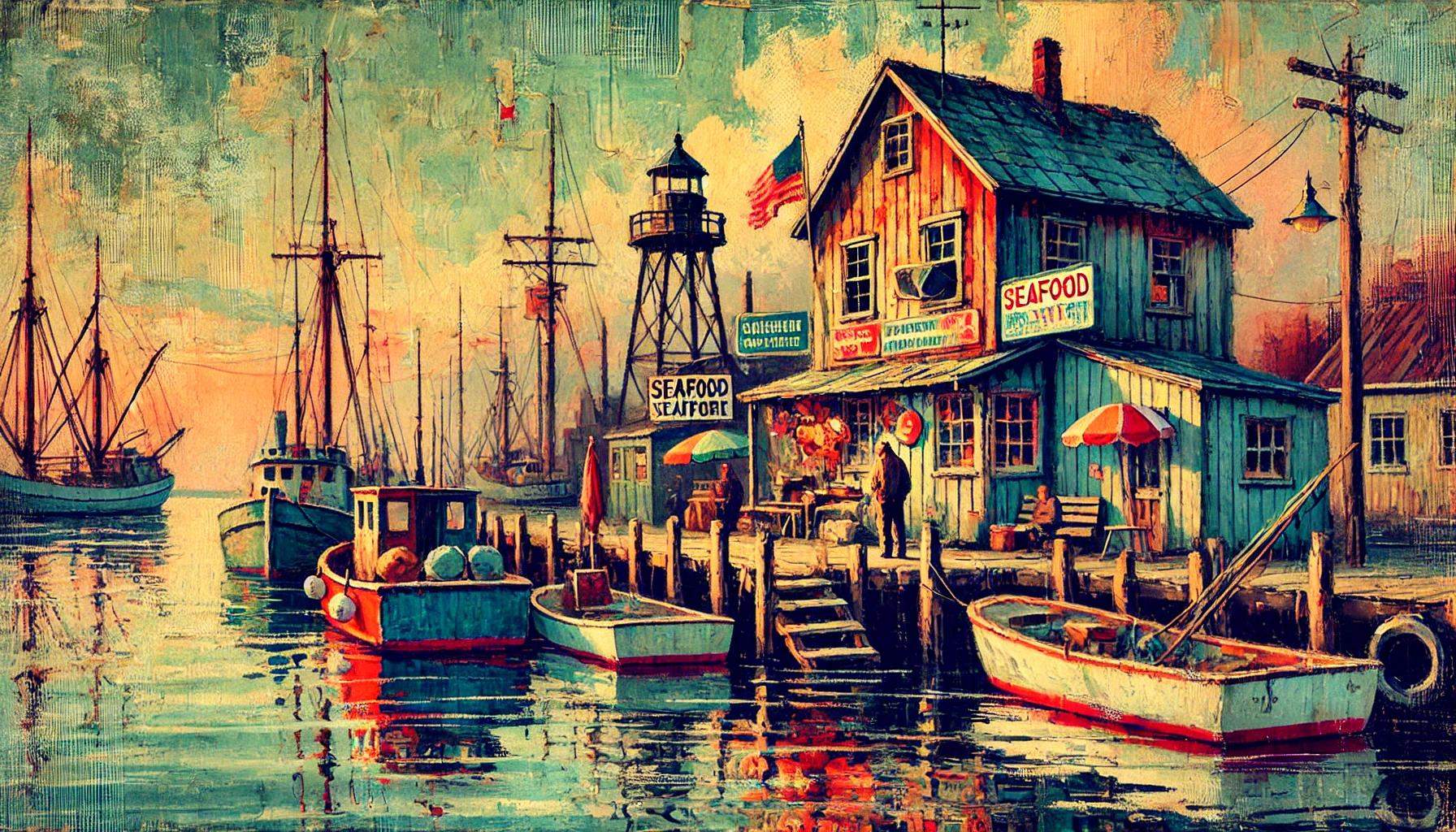
Color and composition reinforce this effect. Scenic retro art often uses softened palettes and simplified forms. The goal isn’t realism, but clarity. Details that would anchor the image too tightly to the present are reduced or removed. What remains is structure and tone.
This simplification echoes how places live in memory. We don’t remember every sign or building. We remember the curve of the road, the line of the horizon, the way light fell across the space. Scenic art that feels retro mirrors that selective process.
There is also a sense of completion in scenic imagery. A place feels whole on its own. It doesn’t suggest interruption or transition. That completeness makes it easy to view the scene as belonging to a finished moment rather than an ongoing one.
In contrast, images tied closely to current activity—crowded streets, digital interfaces, fast-moving scenes—feel anchored to the present. Scenic art avoids those signals. By doing so, it naturally drifts toward the past, even when it depicts places that still exist.
This is why scenic art often carries a quiet emotional pull. It doesn’t ask the viewer to feel nostalgia. It simply offers space. In that space, memory has room to surface.
Retro art makes use of this tendency by treating scenery as a container for time. The image doesn’t insist on meaning. It allows meaning to settle.
In the end, scenic art feels retro because it slows the world down. It removes urgency, noise, and distraction, leaving only atmosphere. That atmosphere creates distance, and distance creates reflection.
Retro art doesn’t rush the viewer through a landscape. It invites them to stand still and look back—long enough to recognize how time has already passed.
That quiet distance is where the retro feeling begins.
Unlike images of people or events, scenic art doesn’t depend on fashion, behavior, or technology to signal age. A road, a shoreline, or a cluster of buildings can look nearly the same for decades. When we look at scenic art, we aren’t just seeing a place—we’re seeing how time settles over it.
Scenic art also removes urgency. There is no action to follow, no outcome to anticipate. The scene simply exists. That stillness mirrors how memory works. We remember places not as sequences, but as impressions: light, space, atmosphere.
Retro art often draws on this quality. By focusing on scenery, it sidesteps the need for historical detail and moves directly into mood. The viewer doesn’t need to know when the scene takes place. It feels separate from now by its calm alone.
Another reason scenic art feels retro is scale. Landscapes tend to dwarf individual presence. People may be absent or reduced to small marks within the scene. This shifts attention away from personal identity and toward shared experience. The image belongs to anyone who has passed through similar spaces.
Color and composition reinforce this effect. Scenic retro art often uses softened palettes and simplified forms. The goal isn’t realism, but clarity. Details that would anchor the image too tightly to the present are reduced or removed. What remains is structure and tone.
This simplification echoes how places live in memory. We don’t remember every sign or building. We remember the curve of the road, the line of the horizon, the way light fell across the space. Scenic art that feels retro mirrors that selective process.
There is also a sense of completion in scenic imagery. A place feels whole on its own. It doesn’t suggest interruption or transition. That completeness makes it easy to view the scene as belonging to a finished moment rather than an ongoing one.
In contrast, images tied closely to current activity—crowded streets, digital interfaces, fast-moving scenes—feel anchored to the present. Scenic art avoids those signals. By doing so, it naturally drifts toward the past, even when it depicts places that still exist.
This is why scenic art often carries a quiet emotional pull. It doesn’t ask the viewer to feel nostalgia. It simply offers space. In that space, memory has room to surface.
Retro art makes use of this tendency by treating scenery as a container for time. The image doesn’t insist on meaning. It allows meaning to settle.
In the end, scenic art feels retro because it slows the world down. It removes urgency, noise, and distraction, leaving only atmosphere. That atmosphere creates distance, and distance creates reflection.
Retro art doesn’t rush the viewer through a landscape. It invites them to stand still and look back—long enough to recognize how time has already passed.